

Mystery Solved:
The Frog Marks the Spot!
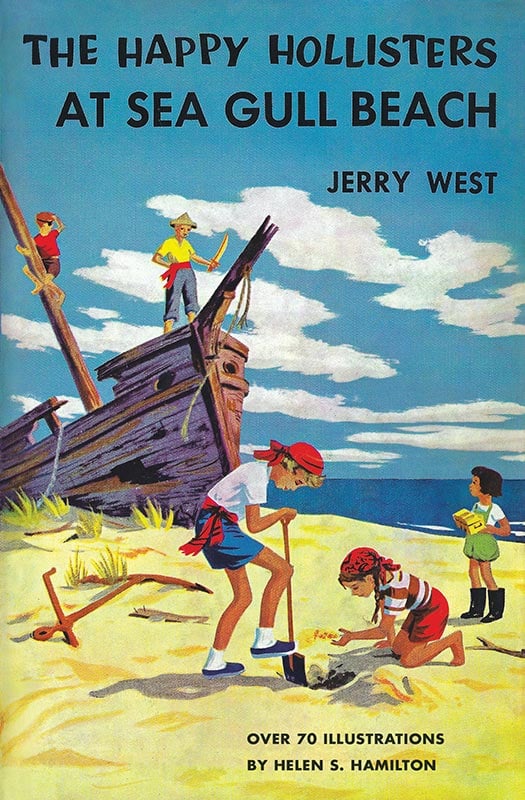
How do you find a buried treasure? Jim Hawkins and Captain Jack Sparrow might tell you that “X marks the spot.” Andrew Svenson (aka Jerry West), author of The Happy Hollisters at Sea Gull Beach, offered another theory: treasure may be found “where the frog rock looks across to Spain.”
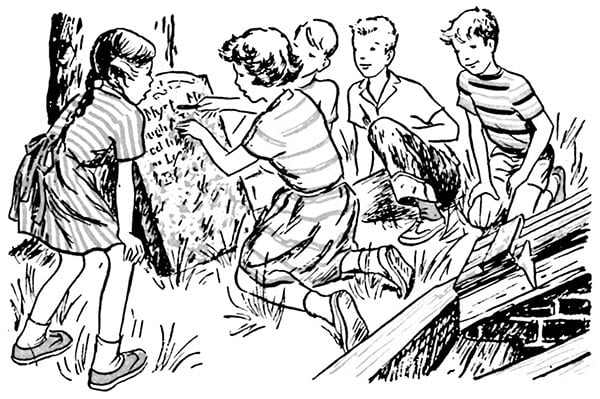
A Mystery Man
Though a Pirate he be
Loved his Ship and the Stormy Sea
All was lost on the Bounding Main
Where the Frog Rock looks Across to Spain.
The Happy Hollisters believe this inscription on a tombstone near Sea Gull Beach is the final clue in their hunt to find the long-lost treasure that sank with the pirate ship, Mystery. [Chapter 14] Young readers have wondered for many years whether the Happy Hollisters adventures were based on true stories, and if so, where did Andrew Svenson get the idea for a frog-shaped rock marking the way to a treasure? Based on clues left behind in his family photos and letters, we’ve finally pieced together a plausible explanation!
In the summer of 1950, Walt Disney Pictures released its first fully live action movie, an adaptation of Robert Louis Stevenson’s 1883 classic, Treasure Island. The movie starred Bobby Driscoll as Jim Hawkins and Robert Newton as Long John Silver. Newton’s distinctive portrayal of Silver popularized the pirate patois and buccaneer bravado that has become traditional for on-screen pirates into the 21st century.
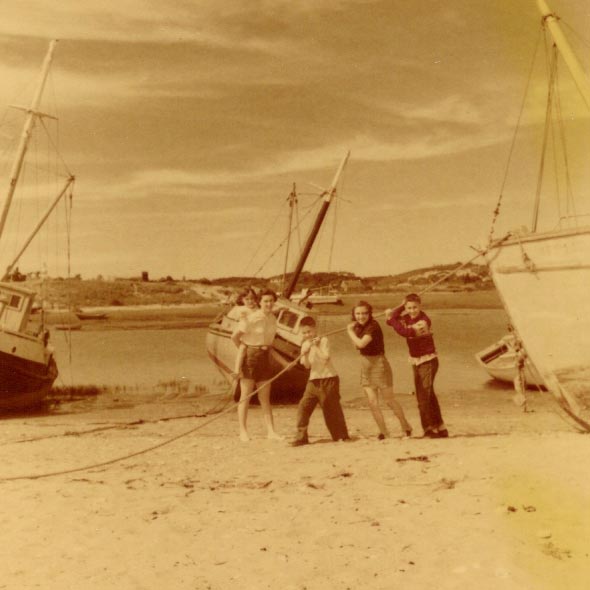
Andrew Svenson’s four older children would have seen Treasure Island at the Royal Theater near their home in Bloomfield, New Jersey. His adventurous pre-teen boys, Andy Jr. and Eric, were the prime age to dream of swashbuckling and searching for treasure like Jim Hawkins. How excited all the children must have been when their father announced that their 1952 summer vacation would take them to Wellfleet, Cape Cod!
Mr. Hollister tells his children, as they set out from Shoreham, that the drive to Sea Gull Beach will take about “a day and a half.” [Chapter 4] Assuming that fictional Shoreham was located near Bloomfield or somewhere in neighboring Pennsylvania, a pre-interstate-highway drive to Massachusetts could easily have taken that long. Roundabout lunchtime, as they meandered down Route 44 in eastern Connecticut, the Svensons might have stopped for a picnic lunch in Eastford—at the popular Frog Rock Rest Area.
This scenic stop marked by a huge glacial boulder has been a roadside attraction since it was first painted to look like a frog by state legislator Thomas J. Thurber in 1881! It is easy to see how Svenson might have used a bit of creative license to move this quirky landmark 150 miles to the east to become Frog Rock of Sea Gull Beach! [Chapter 16]
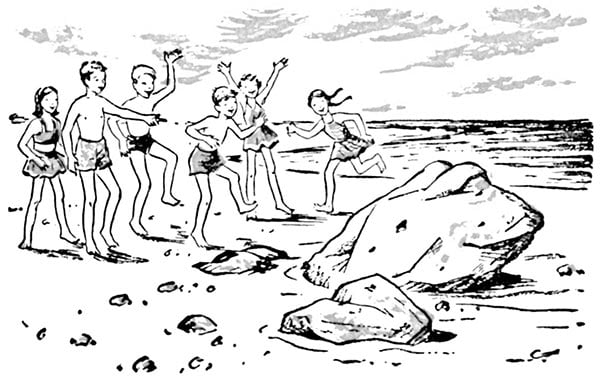
Today the painted boulder sits on private land, but the owner welcomes travelers to the Frog Rock Summer Shack. It is open for family-friendly roadside refreshments on weekends from May through September.
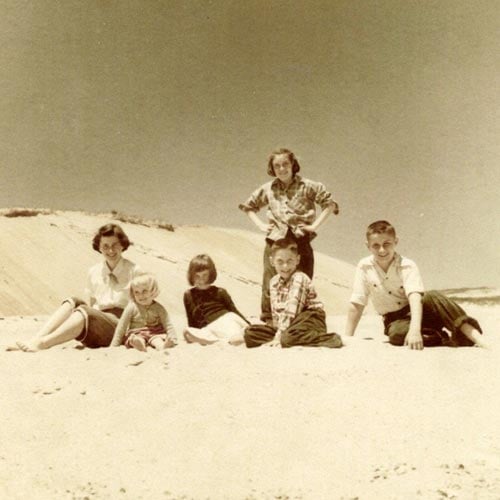
Once they arrived at Wellfleet on Cape Cod, the Svenson children enjoyed exploring the seashore and climbing the sandy dunes. Mr. Svenson later wrote to a friend that his sons spent many hours on the waterfront that summer, listening to the “old codgers” spinning yarns about their younger days as oystermen and fishermen.
Through those old codgers, Andy Jr. and Eric may have heard talk of the sinking of the Whydah Gally and the bits of treasure that gradually washed ashore over the years. The Whydah Gally was originally a slave ship, recommissioned as a pirate ship by Captain Samuel “Black Sam” Bellamy. The pirate flagship, loaded with loot pillaged from other ships, was claimed by the Atlantic Ocean during a violent storm off the Cape in 1717.
In The Happy Hollisters at Sea Gull Beach, a kindly old treasure hunter named Scowbanger shows the children some of the artifacts he has found washed up on the coast. He tells them, “I let the sea work for me. When she’s ready to give up her treasures, she’ll do it, but not a second before.” [Chapter 7] The Svenson children, like their namesakes, the Hollisters, spent sunny days that summer sifting through the sandy dunes with their little shovels, hoping to find some small trinkets the sea has given up.
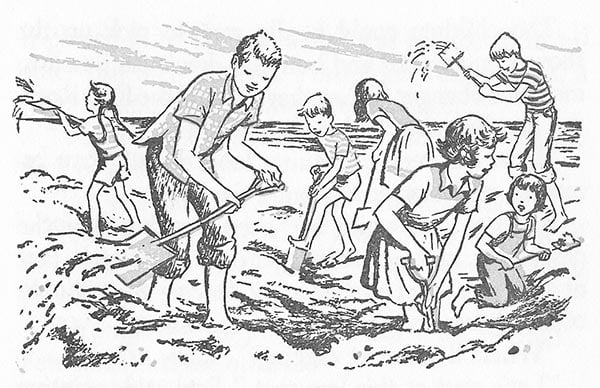
Some 30 years after the Svensons’ visit to Cape Cod, local underwater explorer Barry Clifford and his team located the wreck of the Whydah Gally, lodged in the sand under about 30 feet of water off the coast of Wellfleet. Their discovery yielded a bell engraved with the ship’s name, proving their find was indeed the Whydah Gally—much like the Mystery anchor that Ricky Hollister found at Sea Gull Beach. [Chapter 13] More than 200,000 artifacts were eventually recovered from the Whydah Gally, including coins, weapons, navigational instruments, and personal effects of the ship’s crew. In 2016, Clifford opened the Whydah Pirate Museum in West Yarmouth, where these items are now on display. The museum holds the largest collection of artifacts from a single shipwreck, and the Whydah Gally remains the only fully authenticated pirate shipwreck ever discovered in U.S. waters.
It’s intriguing that the events in The Happy Hollisters at Sea Gull Beach mirror the real history of Cape Cod’s pirates and the discovery of the Whydah Gally, even though a large span of time exists between them. It just shows that exploring for pirate treasure never goes out of style. If you’re driving to Cape Cod this summer, be on the lookout for Frog Rock!
References:
- Andrew Svenson Archives of The Hollister Family Properties Trust
- Stevenson, Robert Louis. Treasure Island. Aladdin Classics, 2000.
- Pirates of the Caribbean: The Curse of the Black Pearl. Directed by Gore Verbinski, Walt Disney Pictures, 2003.
- West, Jerry. The Happy Hollisters at Sea Gull Beach. Doubleday & Co., 1953 and The Svenson Group, Inc., 2011.
- Whydah Pirate Museum, West Yarmouth, MA